


The Most Important Leash Rule for Dogs Who Pull

Updated: Aug 26
If your dog pulls on leash, I want you to think about the leash a little differently. Its job isn’t to constantly control where your dog goes or keep them in position. It’s there for safety, gentle guidance, and communication when you need it.
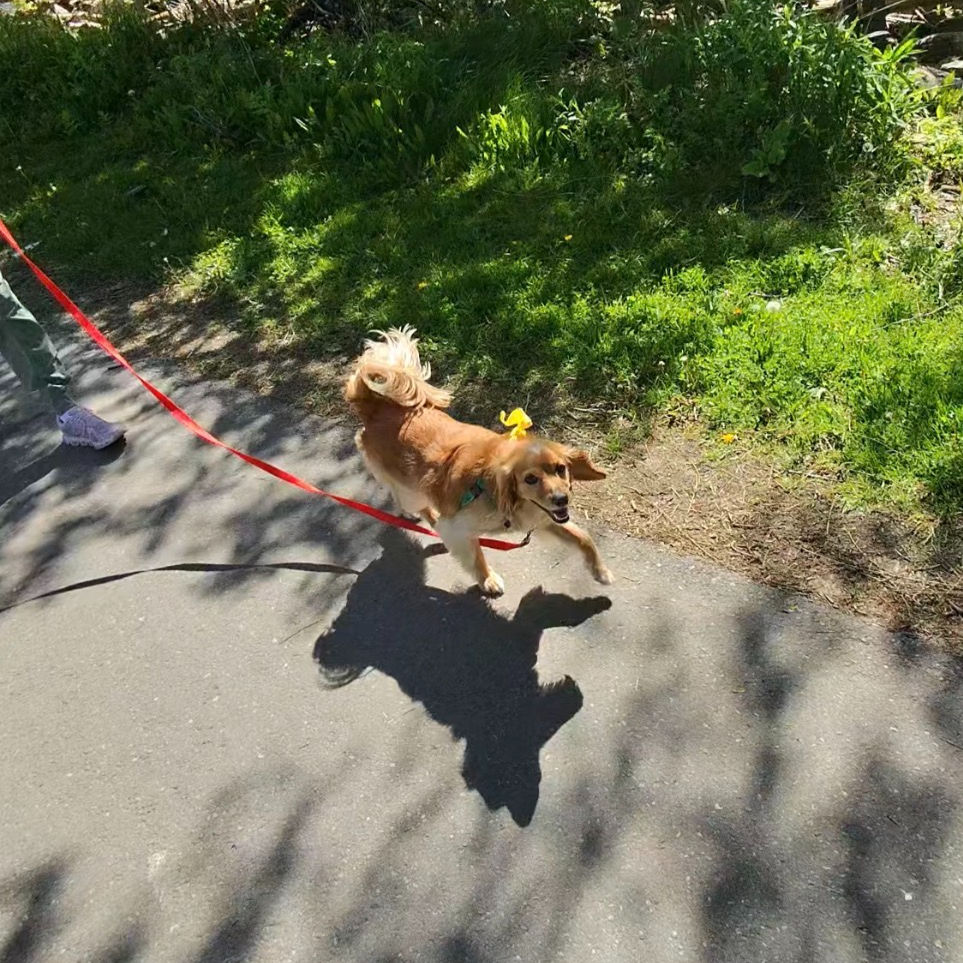
Think of it like holding a young child’s hand while crossing a street or walking through a busy area. You’re not holding their hand to punish them, snap them back, or force them to move a certain way.
You’re there to help keep them safe while you move through the world together.
Never forget that your voice, your hands, your exchanges and everything you experience together will remain as a positive (or negative memory) that can make all the difference during your next interaction on walks. So what’s the most important leash rule for dogs who pull? Keep the leash as loose as the situation safely allows.
The Goal Isn’t Always a Long Leash
A longer leash can be great when you’re somewhere quiet and safe because it gives your dog more room to sniff, explore, and make choices. But a long leash isn’t automatically better, just like a short leash isn’t automatically restrictive.
Sometimes safety means shortening the leash around traffic, people, dogs, or tighter spaces.
The important part is that shorter should not automatically mean tighter. A leash can be short and still feel loose and comfortable.
Why Constant Leash Tension Matters
When the leash stays tight for long periods, the walk can start to feel like a constant push-and-pull instead of something relaxed. That pressure can make it harder for your dog to think clearly, especially if they’re already excited, worried, or overwhelmed.
And if leash tension keeps showing up during stressful moments, your dog may start to associate that tight feeling with those moments too. That’s one of the reasons I want the leash to return to loose as quickly and as often as the situation safely allows. Watch: Why leash pressure is the wrong goal
Guide Gently, Then Release
There will absolutely be moments when you need to guide your dog with the leash, especially for safety. Maybe a car is coming, another dog is getting too close, or you simply need to move through a tighter space. Watch what this looks like on a real walk with Cosmo:
In those moments, I want the leash to help you communicate “we need to move this way”, not “you did something wrong.” Guide gently, then give the leash back as soon as you safely can.
What If the Leash Keeps Getting Tight?
If you’re constantly shortening the leash, bracing against your dog, or feeling like you have to hold on for dear life, that’s useful information too.
It might mean the environment is too difficult right now, your dog is too excited or overwhelmed to stay connected, or you simply need more space than the area allows.
Rather than turning the leash into the main way you manage the walk, change something about the situation. Move somewhere quieter, create more distance, slow things down, or give your dog a chance to reset.
The Leash Can Support the Walk, But It Can’t Teach It
A leash, harness, or other piece of walking equipment can make things safer and easier to manage, but none of those tools can teach your dog how you want the walk to feel.
That learning comes from everything happening around the leash: choosing environments your dog can handle, reinforcing check-ins and moments of connection, giving them opportunities to sniff and explore, and helping them when things become too much.
The equipment should support that conversation between you and your dog, not replace it.
Why I Don’t Use Leash Pops or Corrections
Leash pops, yanks, and sudden corrections may interrupt pulling for a moment, but they do that by adding discomfort, surprise, or pressure to the walk.
That might change what your dog does in that second, but it doesn’t necessarily help them understand what you do want or why walking with you is worth choosing.

And if those corrections happen when your dog is already worried, frustrated, or overstimulated, they can make an already difficult moment feel even less predictable.
I want the leash to remain something your dog can trust.
A safety line, a way to gently guide when needed, and then something that becomes almost invisible again when everything is going well.
When Your Dog Starts Pulling
When the leash suddenly gets tight, try not to make your first reaction pulling back harder. Instead, notice what changed. Did your dog spot something, get excited, become unsure, or simply reach the point where the environment is getting too difficult?
Sometimes creating a little more distance, changing direction, slowing down, or giving your dog a moment to sniff is enough to make the leash feel loose again.
The leash can tell you that something changed, but it can’t tell you why. That part comes from paying attention to the dog on the other end of it.
If you’re not sure what’s causing the pulling in the first place, start by looking at why your dog may be pulling on the leash.
The Most Important Leash Rule
So on your next walk, don’t worry about achieving a perfectly positioned dog or keeping the leash at one specific length. Just start noticing what the leash feels like between you.
Shorten it when safety calls for it. Give your dog more room when you safely can. Guide when necessary, then look for every opportunity to soften your hands and let that tension disappear again.
Because the most important leash rule isn’t about control. Keep the leash as loose as the situation safely allows. And if you’re ready to work on the walking itself, here’s how to help your dog stop pulling without pain or leash corrections.

